The Armed Forces Officer
Ten sets of ideas that matter both for U.S. military officers and everyone else

In January 2025, I began writing a series of ten posts that summarize and unpack ideas from The Armed Forces Officer, a book by Richard Swain and Albert Pierce. That series is now complete, and below you will find a summary quote and a link to each of the ten posts in order.
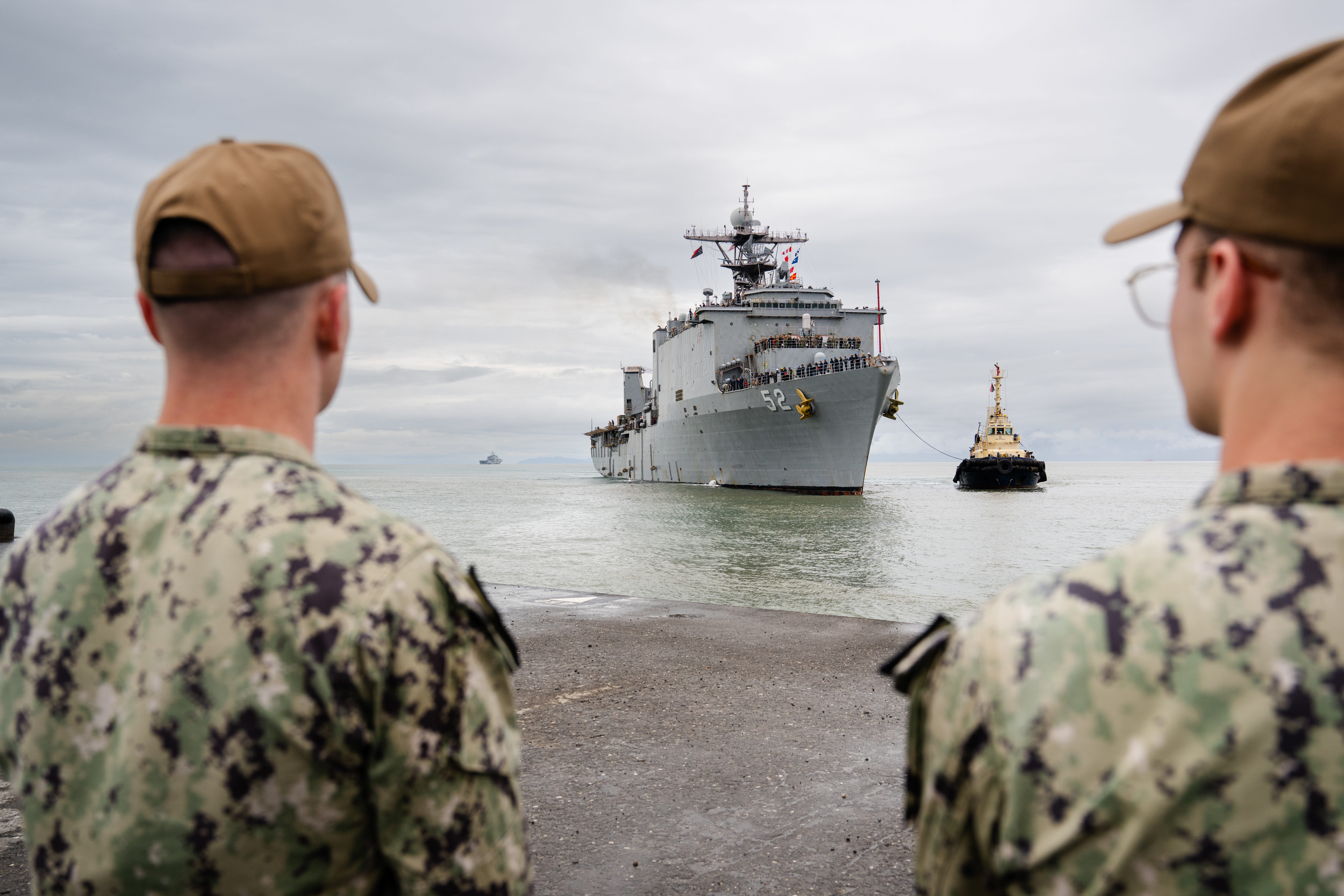
I wrote this series with the hope that it would be useful for my fellow officers in the U.S. military. As some of you likely know, I’m a senior officer in the U.S. Navy. As always, these are my views, and they do not necessarily represent the views of the U.S. Department of Defense or its components.
For those of you who are not affiliated with the military, I hope that perhaps you might find something interesting or informative within it as well.
I didn’t push all of the ten posts out via e-mail given that most of you likely subscribe to Reckoning because you’re interested in my usual topics at the intersection of social science, philosophy, and, to some extent, theology as they pertain to how we humans navigate the hardship and uncertainty of life.
Those topics remain my central interests that I will explore here. If you’re new to Reckoning, check out my full archive by clicking here and consider subscribing if you haven’t already.
Although I normally write about life’s adversity more generally, another important part of how we navigate a certain segment of life’s crucibles involves how we conceptualize, operate, and interact with the military.
Why?
One reason is that a lack of safety and security is one way in which life for every person can become highly uncertain and dangerous. Another reason is that a professional military—properly construed, organized, and operated—ensures the freedom and supports the well-being of its nation’s people. As such, I argue that understanding what being a military officer is about matters for all of us—both for military members (officers and enlisted) and civilians.
With that being said, I hope you find some value in my summaries and discussion of The Armed Forces Officer.
I wish you all the very best in 2026.
1. The Commission and the Oath
“In the United States, the military’s strength depends upon the trust placed in it by the government and the American people. That trust, however, must continually be earned and maintained through military officers living up to the the promises of their oaths as they fulfill the expectations of their commissions. Without that trust, the military institution erodes and society eventually suffers.
“Military officers are duty-bound to remember these key tenets and live them. And the American public should know them as well so as to understand its military forces and the expectations that its members must uphold.”
Click on the link below for my discussion of Chapter One.

2. The Profession of Arms
“For my fellow members of the profession of arms, it is important for us to recognize and remember what we are, the standards we must uphold, and the relationship we must curate with those whom we serve. Keeping these ideas salient is important so that we continually maintain and strengthen the trust and confidence that we have with the American people.
“For civilians in countries with professional militaries like the United States, it is important to recognize that those forces exist to serve the state—not the other way around. And at least in the American system, it seems that there’s great value in a healthy interplay among civilian leaders, society, and the military.”
Click on the link below for my discussion of Chapter Two.

3. The Officer in the Profession of Arms
“Values, virtue, and character matter for all of us—but they matter especially for people who operate in areas of influence and in situations in which the stakes are high. And to become a person of character requires humility, a willingness to be self-critical and learn.
“Institutions like the military can provide an environment for such growth, yet that only works to the extent that individual people within the organization continue to care about such growth and proper orientation toward ethics themselves. The same is true for non-military institutions and organizations, and that reality highlights an important truth for all of us: We often become something like the people with whom we spend the most time.”
Click on the link below for my discussion of Chapter Three.

4. The Officer at Work: The Ethical Use of Force
“Order, discipline, and ethics matter most when the stakes are high—and what stakes could be higher than in the decision to employ deadly force and in the decisions about how to go about waging armed conflict?
“It is critical for civilian and military leaders alike to understand the principles of jus ad bellum and jus in bello, grounded in the Just War tradition and the Law of Armed Conflict. Otherwise, governments may choose to use military force when they shouldn’t, military leaders may choose to circumvent ethical standards in combat, or both.”
Click on the link below for my discussion of Chapter Four.

5. The Officer at Work: Leadership
“Being a demanding task master might work for a while to drive a team to achieve some goals. Yet over time, such an approach leads to resentment among followers, poor morale, and lower performance. Instead, the key to long-term commitment and motivation in leadership lies in the mindset of service, which requires leaders to maintain a sense of humility and a recognition of the greater good as they go about their business.
“Regardless of whether one is trying to influence other people in a military or civilian context, there’s tremendous value in considering one’s role as one of service (1) to something bigger than themselves and (2) to the people involved in the effort. Considering leadership as a call to service, furthermore, keeps one’s focus off of oneself. It’s not about you.”
Click on the link below for my discussion of Chapter Five.

6. The Officer at Work: Command
“Certainly the idea of command is one that’s much more common in the military than in civilian organizations. Military officers must know what command means and intentionally condition themselves to be ready when called upon to take such positions of authority with full understanding of the responsibility and accountability that the position entails.
Civilian leaders, I would also argue, can benefit from these concepts. Leaders everywhere who understand the scope of their authority, take responsibility, and accept accountability are likely to be ones who both get things done and get things done the right way.”
Click on the link below for my discussion of Chapter Six.

7. The Officer and Society: The Vertical Dimension
“In the United States, elected civilian leaders—or civilians appointed by those elected civilian leaders—control the military. This represents what we can think of as the “vertical” dimension of civil-military relations.
“Because that relationship is one in which the civilians have the ultimate authority yet the types of expertise differ greatly between those civilians and their military counterparts, it takes continual work to ensure the relationship functions well.”
Click on the link below for my discussion of Chapter Seven.

8. The Officer and Society: The Horizontal Dimension
“For civilians, this means understanding both what they have in common with military personnel and the special demands placed upon them. For civilians in senior government positions, it requires a thoughtful exercise of authority as they design and implement various policies and practices.”
“For military officers, this means being careful leaders as they carry out those duly enacted policies and practices. Ongoing appropriate interaction with civilian society—be it through social, community, or faith-based organizations or through deliberate community relations activities—are also key ways in which both members of the military and civilians may interact in meaningful ways.”
Click on the link below for my discussion of Chapter Eight.

9. Service Identity and Joint Warfighting
“Each of the six branches of the U.S. military has its unique areas of focus, missions, and ways in which it articulates or lives its values. That’s a good thing, as it allows for and supports the specialization needed to be very good at many different highly complicated aspects of modern warfare and related operations.
“Regardless of branch, however, doing military work quite often demands joint operations. As such, it behooves all military officers, especially as they advance in experience and paygrade, to become increasingly ready to work across the boundaries of their own particular service.”
Click on the link below for my discussion of Chapter Nine.

10. The Armed Forces Officer
“For my fellow American officers in the profession of arms, may we remember and abide by our oath, which is first and foremost to the Constitution of the United States. We have pledged to support and defend our fundamental set of laws, rules rooted in ideals such as those described in the Declaration of Independence. May we preserve and strengthen our institutions, and in a way thereby contribute to an increased public sense of trust and confidence that our Republic is itself worthy of preservation and protection.
“And regardless of what one chooses to do in life, may we all take those choices seriously. Because when we do, we can all perhaps contribute a bit more to making our world increasingly more like the one that we want—both for ourselves and our friends and our neighbors and our children.”
Click on the link below for my discussion of Chapter Ten.

Please note: The opinions and views expressed here belong solely to the author and do not necessarily reflect those of the Department of Defense (DoD) or its components. Any mention of commercial products or services does not imply DoD endorsement. Additionally, the presence of external hyperlinks does not signify DoD approval of the linked websites or their content, products, or services.
References and for further reading
All of my current posts about The Armed Forces Officer
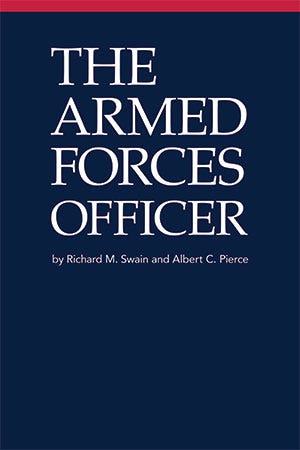
The Armed Forces Officer by Richard M. Swain and Albert C. Pierce. Click here to download the book for free from National Defense University Press.
The Declaration of Independence
The Constitution of the United States
Code of Conduct for Members of the United States Armed Forces
Join the Navy! Click here for information