
My (and Your) Real Enemy
And how we so easily lose the fight

If it feels to you like society is divided on many important issues, you’re not alone. At least in the United States, some 80% of adults believe that’s true.
And data from December 2025 paints a grim picture of Americans’ outlook on similar matters, with some 89% predicting a 2026 of political conflict versus cooperation.
If you pay any attention to the news, this will not surprise you.
If you have conversations with an even somewhat broad range of people, this will not surprise you.
And finding examples of conflict among people and groups across history is, of course, elementary.
Part of the reason that such examples and perceptions are so widespread has to do with our psychology. It’s much easier—and perhaps it was helpful evolutionarily—to see the world in terms of good versus bad people, safe versus dangerous groups.
Furthermore, thinking of oneself as one of the “good people” or the “correct people” is a warm blanket of psychological and sociological perception. It validates our sense of self-righteousness and self-worth, and it makes short work of sorting out the world’s weirdness and ambiguity.
Sometimes it is the case that people have bad ideas, even evil ones. Sometimes it is the case that threats exist and must be dealt with appropriately.
Yet such thinking can also be a red herring, distracting us from the heart of the matter, insulating us from the unpleasant truth that we are ourselves not just part of the problem but carriers of it, living and breathing embodiments of both love and hate, of both right and wrong, of both virtue and vice.
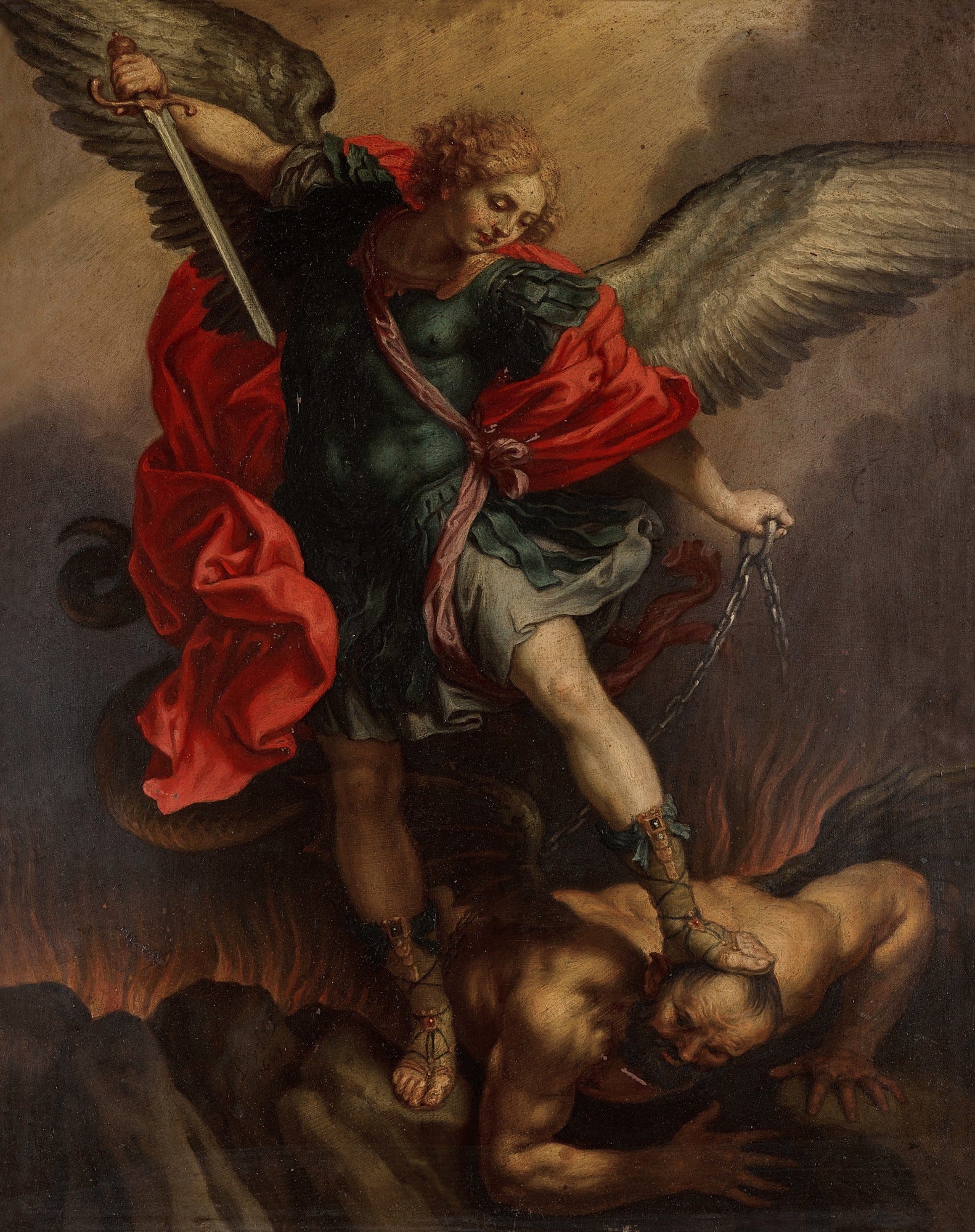
The Line Separating Good and Evil
As Aleksandr Solzhenitsyn wrote in The Gulag Archipelago while reflecting upon his years of imprisonment in the Soviet labor camps,1
Gradually it was disclosed to me that the line separating good and evil passes not through states, nor between classes, nor between political parties either—but right through every human heart—and through all human hearts. This line shifts. Inside us, it oscillates with the years. And even within hearts overwhelmed by evil, one small bridgehead of good is retained. And even in the best of all hearts, there remains … an unuprooted small corner of evil.
Since then I have come to understand the truth of all the religions of the world: They struggle with the evil inside a human being (inside every human being). It is impossible to expel evil from the world in its entirety, but it is possible to constrict it within each person.
Although social science often (or perhaps always) lacks Solzhenitsyn’s descriptive eloquence, it does include similar observations. Notably, such social science highlights the power of situations to frame what people will or will not do. Examples include:
Solomon Asch’s research in the 1950s highlighted how group dynamics can influence people to conform with a majority even when the majority is wrong.
Stanley Milgram’s experiments in the early 1960s showed how authority figures can have a powerful influence over people’s moral decision-making.
Philip Zimbardo’s controversial Stanford Prison Experiment, despite its flaws and ethically problematic design, also showed how various features of a situation influence people’s behavior. Zimbardo later called the tendency for powerful situations to lead otherwise psychologically healthy people toward evil behavior “the Lucifer effect.”
Management scholars Dean Ludwig and Clinton Longenecker touched on a similar idea in a paper they published in the Journal of Business Ethics titled, “The Bathsheba Syndrome.”2 Using the Old Testament story of King David and Bathsheba, they describe how various features of senior-level organizational roles may influence people to act unethically. Namely, being in such a position often comes with privileged access, an inflated belief in personal ability, control of resources, and a potential loss of strategic focus—all of which can make unethical behavior more likely, regardless of the virtuosity of the person.
We should take none of this to suggest that people aren’t responsible for their actions.
But we should take all of this to suggest a cautionary tale about what we tell ourselves about ourselves: None of us is immune from wrongful, even evil behavior. And therefore we must always be on guard, maintaining an acute awareness of our own potential for monstrosity and creating the conditions under which we are continually aware of that interior struggle and practice doing the right thing.
Continued from Solzhenitsyn:
And since that time I have come to understand the falsehood of all the revolutions in history: They destroy only those carriers of evil contemporary with them (and also fail, out of haste, to discriminate the carriers of good as well). And they then take to themselves as their heritage the actual evil itself, magnified even more.
The Nuremberg Trials have to be regarded as one of the special achievements of the twentieth century. They killed the very idea of evil, though they killed very few of the people who had been infected with it. (Of course, Stalin deserves no credit here. He would have preferred to explain less and shoot more.) And if by the twenty-first century humanity has not yet blown itself up and has not suffocated itself—perhaps it is this direction that will triumph?
Yes, and if it does not triumph—then all humanity’s history will have turned out to be an empty exercise in marking time, without the tiniest mite of meaning! Whither and to what end will we otherwise be moving? To beat the enemy over the head with a club—even cavemen knew that.
Here the Russian novelist illumines the correctness of exposing the moral depravity of the Nazis, of showing the dangers of certain ideologies and their influence on human behavior. If we don’t continue taking that approach, he suggests, we will make no progress as a society—we will only continue to see others as enemies and to respond solely with violence.
So what’s the solution?
If the fight between good and evil is at its most fundamental level an interior battle, how might we proceed? What might we do?
Solzhenitsyn offers this:
“Know thyself!” There is nothing that so aids and assists the awakening of omniscience within us as insistent thoughts about one’s own transgressions, errors, mistakes. After the difficult cycles of such ponderings over many years, whenever I mentioned the heartlessness of our highest-ranking bureaucrats, the cruelty of our executioners, I remember myself in my captain’s shoulder boards and the forward march of my battery through East Prussia, enshrouded in fire, and I say: “So were we any better?”
The real enemy is a complacent mind, one that is content resting in the comfort of self-assured righteousness while failing to recognize that a continual struggle rages within each of us and that we all have the capacity for great good and for great evil.
And when we succumb to that complacency, when we begin to bask in the cozy idea that we ourselves are invulnerably good, we’re well on our way to losing the fight.
As Fyodor Dostoevsky’s Father Zosima further implores in The Brothers Karamazov,
The main thing is, stop telling lies to yourself. The man who lies to himself and listens to his own lies reaches a point where he cannot recognize any truth in himself or in anyone surrounding him, and so he loses all respect for himself and for others. Once he respects no one, he stops loving; to occupy and distract himself, he yields to passions and coarse inclinations and ultimately sinks to bestiality in all his vices, and all this comes from incessant lying to himself and to others.3
Alongside having such humility and honesty about oneself, the same social science that highlights how powerful situational forces can incline us toward evil suggests that powerful situational forces can also incline us toward good.
We may all have a little villain in us, but we also may all have a little hero in us too.
So perhaps we might, after adopting a posture of humility and continually seeking self-knowledge through honesty, craft our environments carefully to include what we allow our minds to consume—our mental diet and hygiene—the people with whom we associate, and our relationship with the transcendent.
Maybe if we—if I—did that a bit more, we could in fact change the world.
Please note: The opinions and views expressed here belong solely to the author and do not necessarily reflect those of the Department of War (DoW) or its components. Any mention of commercial products or services does not imply DoW endorsement. Additionally, the presence of external hyperlinks does not signify DoW approval of the linked websites or their content, products, or services.
Learn more about Crucibles, my forthcoming book:


Aleksandr Solzhenitsyn, The Solzhenitsyn Reader: New and Essential Writings, 1947–2005, ed. Edward E. Ericson Jr. and Daniel J. Mahoney (Wilmington, DE: ISI Books, 2006), 265–266.
Ludwig, Dean C., and Clinton O. Longenecker. “The Bathsheba Syndrome: The Ethical Failure of Successful Leaders.” Journal of Business Ethics 12, no. 4 (1993): 265–273.
Fyodor Dostoevsky, The Brothers Karamazov, trans. Michael R. Katz (New York: Liveright Publishing Corporation, 2018), 54.